Published Date
November
2026
Thursday
AIUB Students Win Outstanding Paper Award at IEEE CSDE 2026
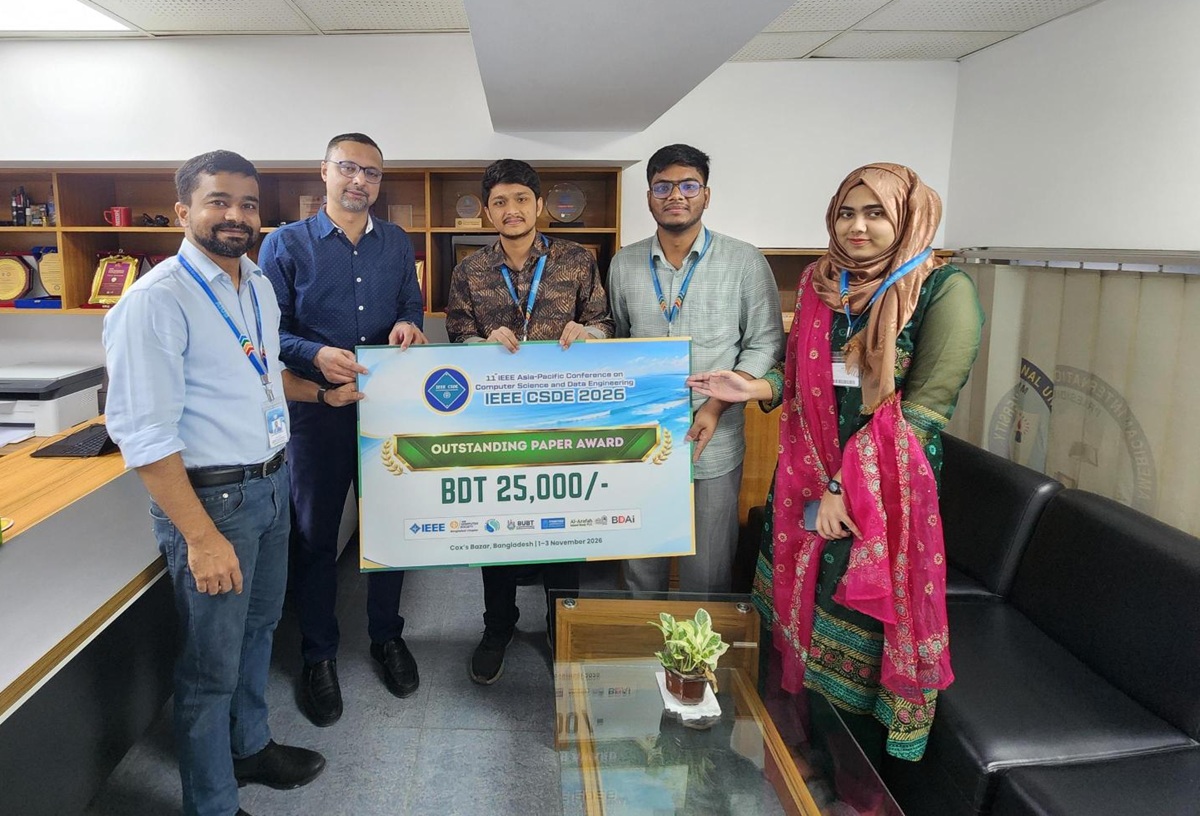
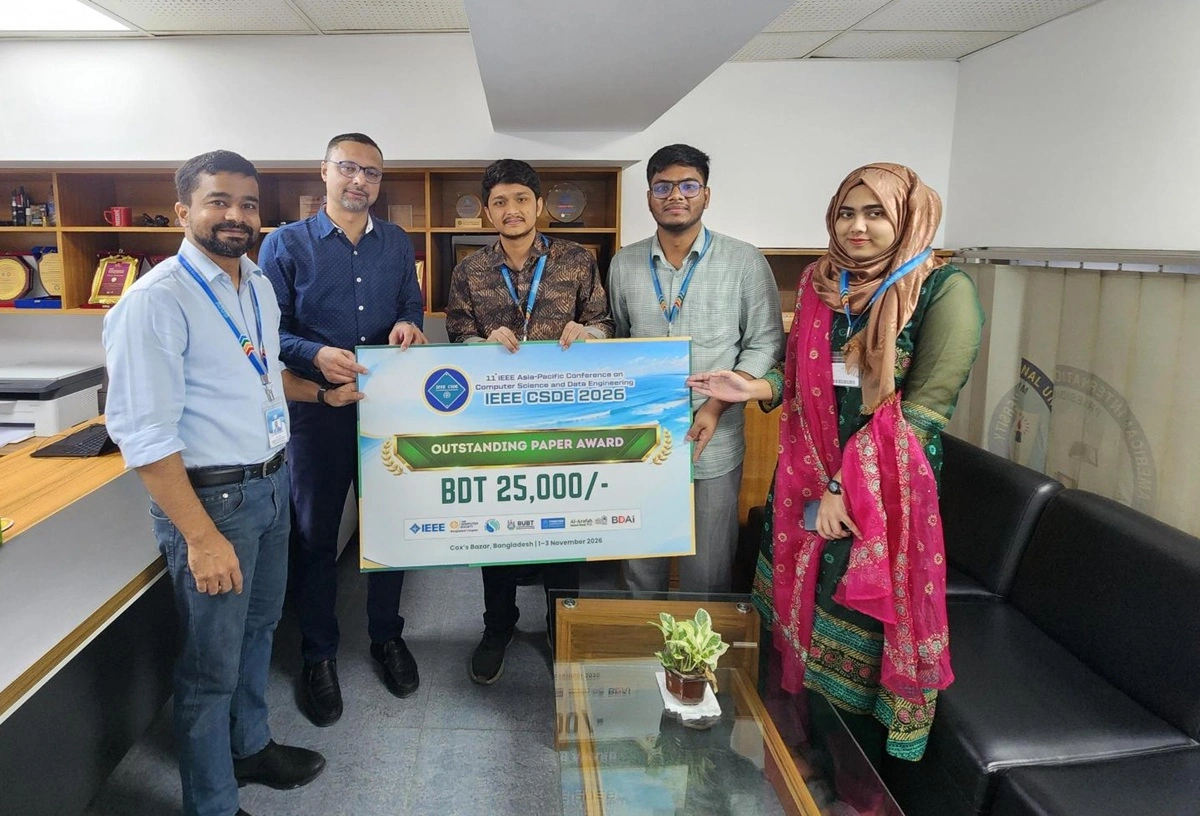
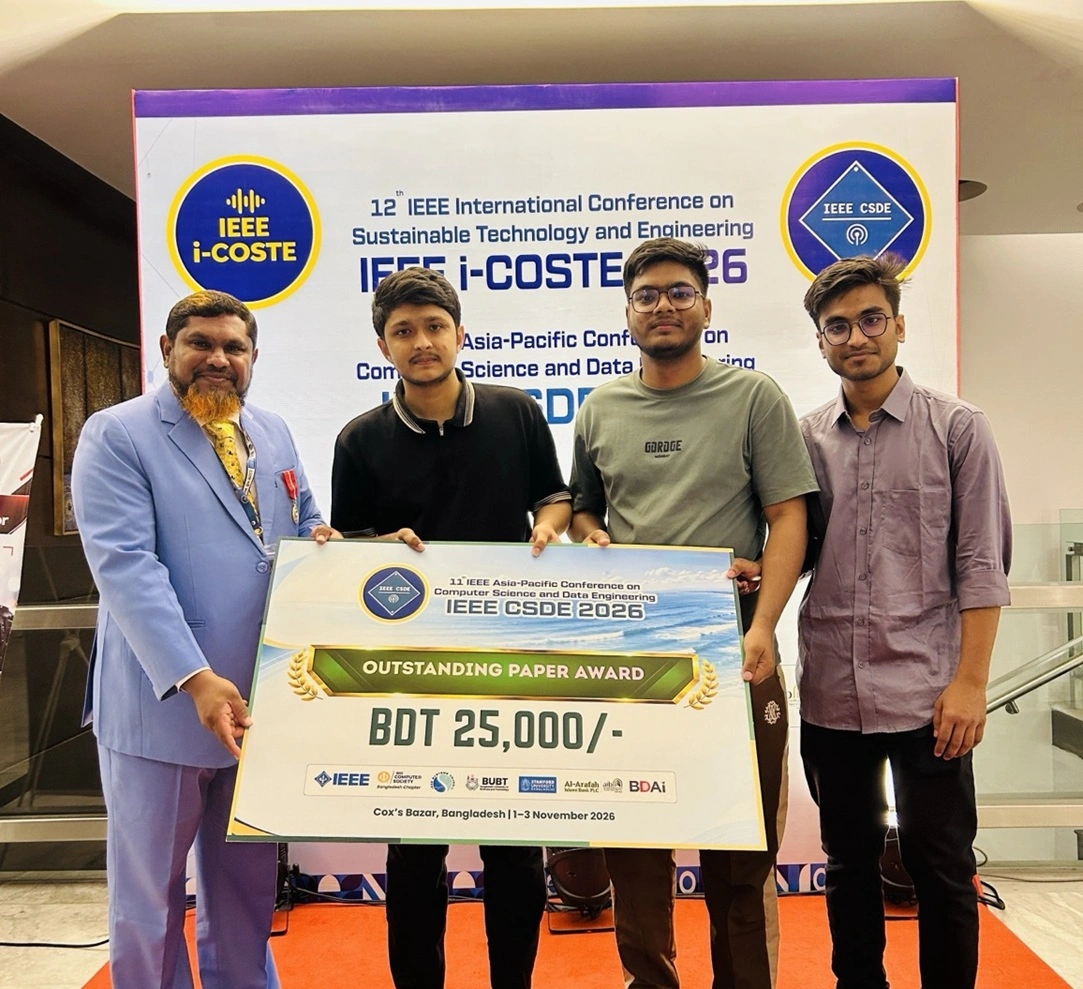
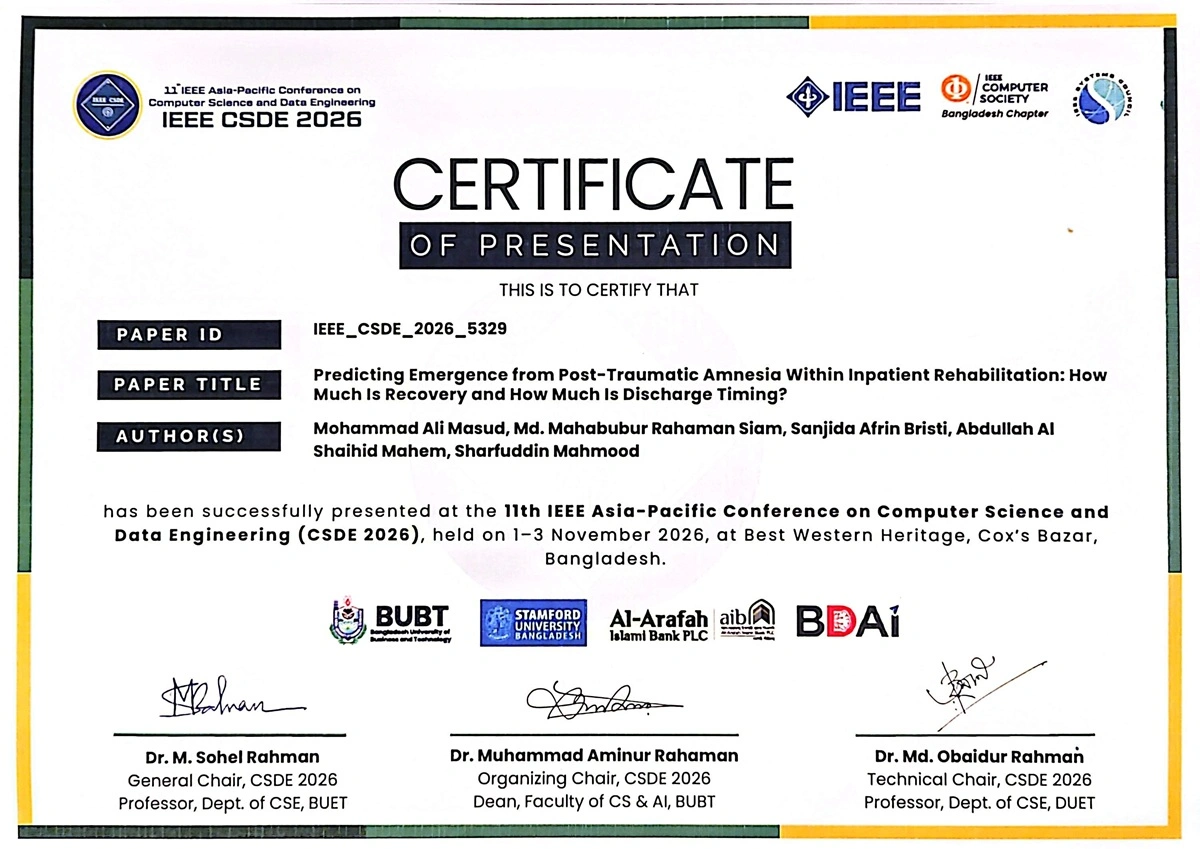
A team of students from the Faculty of Science and Technology (FST) of American International University-Bangladesh (AIUB) has received the Outstanding Paper Award at the 11th IEEE Asia-Pacific Conference on Computer Science and Data Engineering (IEEE CSDE 2026).
Hosted by Bangladesh University of Business and Technology (BUBT), the conference was held from 1 to 3 November 2026, with virtual sessions on the first day and onsite sessions at Best Western Heritage, Cox’s Bazar, on 2-3 November. It brought together researchers, academics, and industry professionals to discuss advances in computer science, artificial intelligence, and data engineering.
The award-winning paper, “Predicting Emergence from Post-Traumatic Amnesia Within Inpatient Rehabilitation: How Much Is Recovery and How Much Is Discharge Timing?”, was authored by Mohammad Ali Masud, Md. Mahabubur Rahaman Siam, Sanjida Afrin Bristi, and Abdullah Al Shaihid Mahem. The work was supervised by Sharfuddin Mahmood, Assistant Professor, Department of Computer Science, AIUB.
About the Research
The study examines whether machine learning models predicting recovery from post-traumatic amnesia (PTA) after traumatic brain injury truly capture cognitive recovery or are largely influenced by patients’ rehabilitation discharge timing.
Using records of 17,895 patients from the US Traumatic Brain Injury Model Systems (TBIMS) National Database, the team compared several survival analysis approaches, including XGBoost, Random Survival Forest, and regularized Cox regression, and applied explainable AI techniques to identify factors linked to recovery duration.
The XGBoost-based model achieved a concordance index (C-index) of 0.857, outperforming the classical Cox benchmark. However, a model based only on rehabilitation length of stay reached 0.793 for the same outcome, showing that much of the predictive information overlaps with discharge timing. The researchers also found that the handling of incomplete observations strongly affects results: complete-case analysis estimated a median recovery time of 19 days, while censoring-adjusted methods estimated approximately 23-26 days.
The study offers methodological insights for AI-assisted neurological rehabilitation research, while noting that external validation is needed before clinical application.
The AIUB community congratulates the student researchers and their supervisor on this achievement, which reflects the university’s continued commitment to student-led research and academic excellence.